
Automated Supplier Risk Assessment and Management
Organizations struggle to continuously monitor supplier risks, leading to potential disruptions.
Description
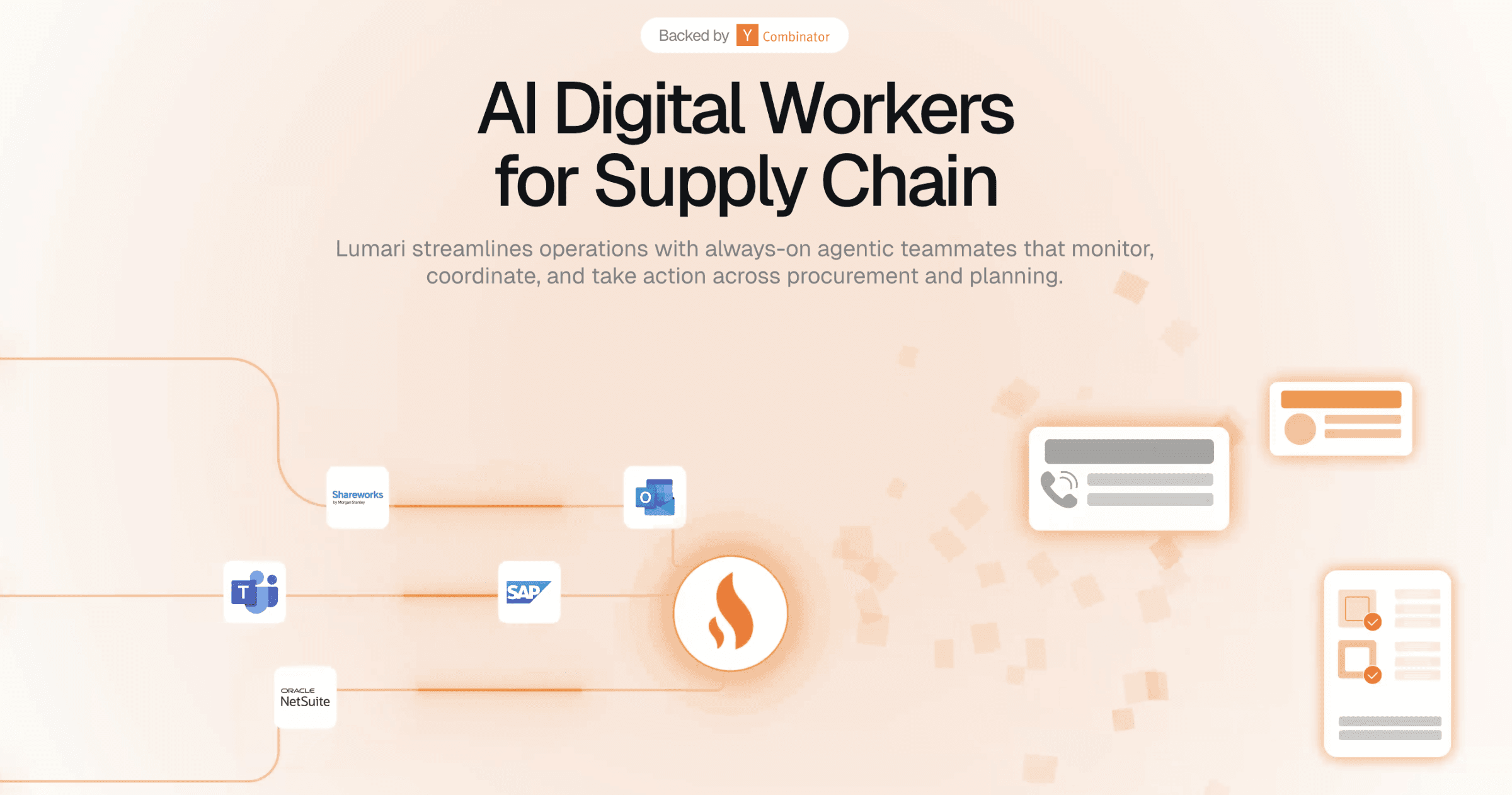
Lumari enables businesses to automate the assessment of supplier risks by continuously monitoring various risk signals such as financial stability, compliance status, and geopolitical events. By integrating with existing ERP systems and communication tools, the AI digital workers analyze vast amounts of data in real-time, providing procurement teams with actionable insights and alerts. This proactive approach allows organizations to mitigate risks before they impact supply chain operations. Additionally, the platform provides a single interface for monitoring all supplier activities, ensuring transparency and streamlined communication. Users can set parameters for when AI agents can autonomously act or escalate issues for human review, ensuring that critical decisions are made with the right oversight. This capability not only enhances supplier relationship management but also optimizes overall procurement strategy by focusing on high-risk areas.
Roles
Capabilities
- •Continuous monitoring
- •Risk signal analysis
- •Automated alerts
Used In
Frequently Asked Questions
Common questions about this use case from related articles
What is the main benefit of AI purchase order management software?
The main benefit is its ability to automate the tracking and management of purchase orders after they are created, significantly reducing the manual workload for buyers.
How does email-based tracking work?
Email-based tracking works by automatically reading supplier responses from emails, extracting relevant information, and updating the ERP system without requiring suppliers to log into a portal.
What distinguishes PO automation from PO management?
PO automation focuses on the creation and approval of purchase orders, while PO management encompasses the entire lifecycle, including tracking and updates after the PO is sent.
What challenges do companies face with traditional PO management tools?
Traditional tools often fail to provide visibility into supplier responses and delays, leading to issues with late shipments and lack of real-time updates in the ERP system.
How can I determine which PO management tool is right for my business?
Evaluate your specific needs, such as whether you require tracking capabilities or just creation and approval features, and consider the level of supplier participation in the chosen system.
Can Dynamics 365 automatically follow up with suppliers on open POs?
No, Dynamics 365 can transmit the PO and surface unconfirmed orders, but it cannot read a supplier's reply or update the system with new dates. Context-aware follow-up must occur outside of Dynamics.
Does the vendor collaboration portal solve supplier communication in D365?
Partly, but only for suppliers who use it. The portal allows for order confirmations and RFQ responses, but many small suppliers continue to use email, leading to a mix of structured and unstructured data.
What does Power Automate handle in Dynamics procurement?
Power Automate manages deterministic tasks like alerts for unconfirmed POs and scheduled reminders. However, it cannot reliably interpret free-text supplier emails or update D365 fields, as that requires human judgment.
Related Companies
Companies that offer solutions for this use case
Related Content
Articles, case studies, and resources
AI Tools Enhance Purchase Order Management and Supplier Engagement
The adoption of artificial intelligence in purchase order management is reshaping supply chain operations, focusing on post-creation lifecycle management rather than just automating PO creation. Companies are now prioritizing tools that not only generate purchase orders but also efficiently track and manage the complexities that arise once orders are placed. Leading firms like Lumari and SourceDay are pioneering solutions that enhance real-time tracking and exception management, critical for improving operational efficiency and responsiveness.
7/15/2026
Closing Supplier Communication Gaps in D365 to Improve Procurement Efficiency
Microsoft's Dynamics 365 Finance and Supply Chain Management (D365) enhances procurement automation but reveals critical limitations in supplier communication. While internal processes like purchase order creation and invoice matching are streamlined, the disconnect in managing supplier interactions leads to reliance on manual follow-ups, undermining operational efficiency for manufacturers. Understanding these gaps is vital for companies adopting D365 as they refine their procurement strategies.
7/23/2026
Addressing Purchase Order Acknowledgment Gaps for Supply Chain Resilience
The article examines the crucial role of purchase order acknowledgments (POAs) in enhancing supply chain management efficiency. It highlights the persistent challenges faced by suppliers, particularly smaller firms, in confirming acceptance of purchase orders, which can lead to operational risks due to discrepancies between system-generated dates and actual supplier commitments. By understanding these gaps, businesses can develop strategies to improve supplier communication and ensure more reliable delivery schedules.
8/17/2026
Manufacturers' AI Shortcomings in Procurement Highlight Efficiency Gaps
The current landscape of AI-driven procurement technology highlights a critical oversight among manufacturers, who primarily focus on automating purchase order (PO) creation while neglecting the subsequent complexities of order management and communication. This presents a significant opportunity for businesses to improve procurement efficiency by implementing AI solutions that address the entire lifecycle of POs, including supplier interactions and real-time updates to enterprise systems. By shifting focus from just generating POs to effectively managing the accompanying processes, companies can mitigate inefficiencies and enhance supply chain accuracy.
8/17/2026